What Binds Countries Together on AI, and What Divides Them
Beyond the Headlines; at the United Nations General Assembly,
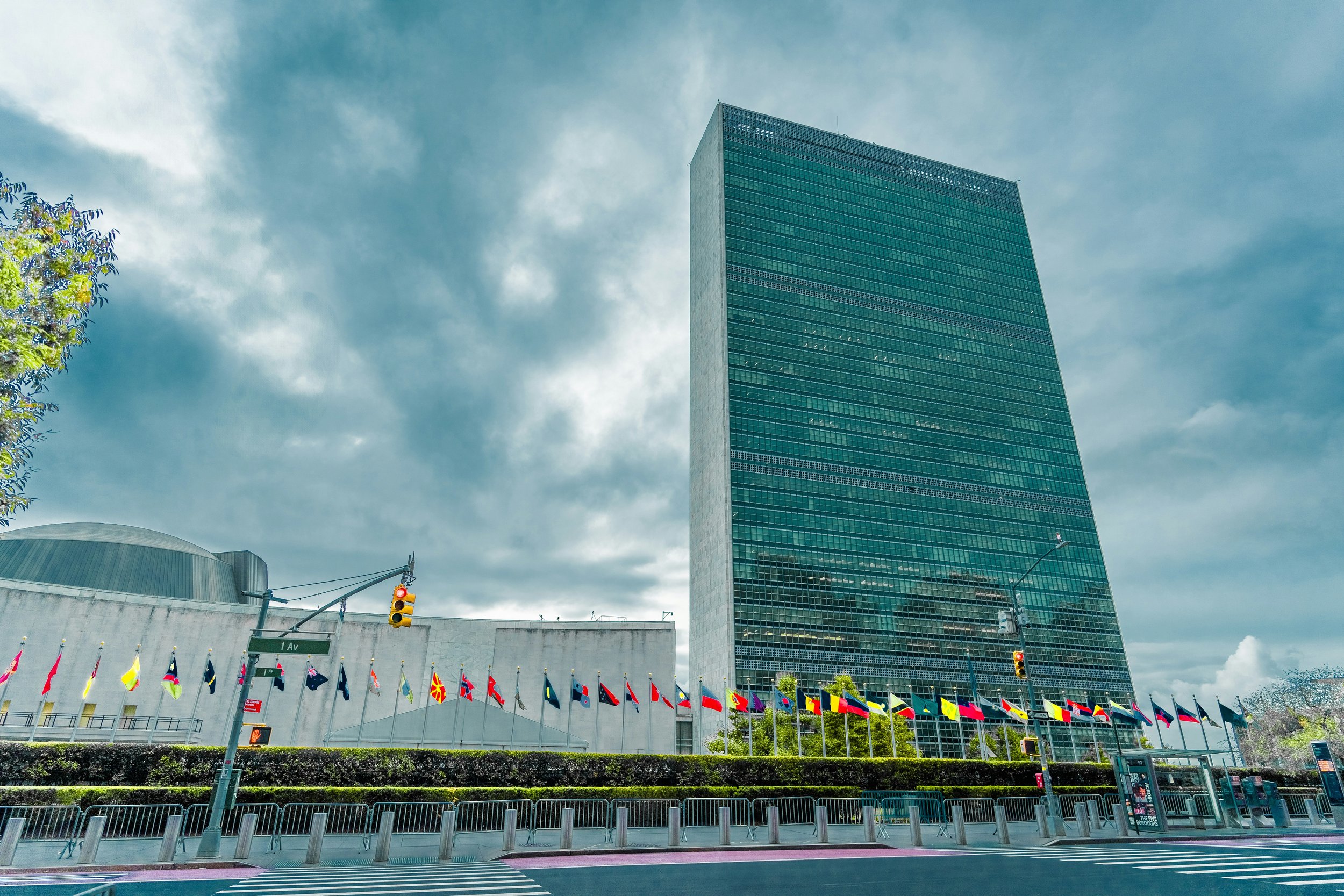
Photo by nils-huenerfuerst, Unsplash
Every September, the leaders of all 193 UN member states gather in New York for the General Assembly's high level week. It is the one room where every country has a seat and a speaking slot, which makes it less a place where decisions are made and more a place where the world's priorities get spoken out loud. AI has not always been among the topics discussed of course. This year the picture changed.
AI ran through the main hall, a Security Council session with AI company chiefs in the room, and a summit between the US and China that followed days later. It was also the last Assembly address for a Secretary General who has spent a decade pushing for global AI governance. For this piece I wanted to step back from the individual announcements and ask a different question: which themes kept coming up, and what do they tell us about where AI goes next?
It is also hard to take in everything that comes out of an event like this: hundreds of speeches, side events and press reports in a single week. So I used an AI assistant to help me read the AI parts of every General Debate speech, 191 of them, and to think through what they might mean for our future. If I had run this exercise on what was reported, I would likely have ended up with a different picture, because the coverage follows the headline speeches, the company chiefs and the summit. So I wanted to do something different and start from the speeches themselves. What to count and what to conclude were my calls. The sources are listed at the end, so you can read the originals yourself.
Reading across all of it, six themes did most of the work. The picture below shows the words that kept surfacing in each of three sources, coloured by the theme each one belongs to. I sized each word by how often its family appears in that source's own text. It is a keyword count, not a measure of what anyone meant, so treat it as a reading. Further down, I check it against every General Assembly speech.
The week in words, by source
Pick a source to see its own word cloud. Word families are grouped by theme and sized by how often they appear. Hover a word for its count.
Keyword counts, not positions: a word shows a topic was talked about, not which side the speaker took. Automatic transcripts for the Assembly and Council.
In the Assembly the biggest word is "human". In the Council it is "human" and "risk", with governance next and control after that. Control runs through both. The US president, Donald Trump, rejected what he called a 'globalist scheme' to control AI at all," and "OpenAI's chief executive, Sam Altman, told the Security Council that "we could lose control of the future to AI." Two voices, one word, two different fears. That was true of the Council. It is less true of the Assembly as a whole, as the count below shows.
Six tensions, and three points of agreement
Laid side by side, the themes are less topics than tradeoffs, each with two defensible poles. Six of them are live arguments. The places where I could not find an argument are listed at the bottom: the human line, children, and truth. Two themes, which risk comes first and truth, only appeared when I counted every speech, so they come after the count. The figure splits each side by session, the General Assembly and the Security Council.
Six tensions in AI governance
Each tension is two reasonable answers to a real constraint.
Hover over (or tap) an answer to see who said it, in the General Assembly and the Security Council.
Control
Who decides
Between: France, a coalition of sovereign states pooling compute
Pace
Between: Singapore and Chile, brakes and a responsible pace, not a halt
Proof
Access
Which risk comes first
Between: 22 states raised both, among them France, Germany, Malaysia and Switzerland
No opposing camp
The human line
Human control over lethal force or military AIAssembly: ten states named it, among them Austria, Slovakia and Singapore, and none argued against it. Council: eight members carried it, and none of the four briefers.Children
Protecting children from AIAssembly: six mentioned them, five about protection (Belgium, France, Greece, Spain, Tonga) and one about learning (Estonia). Also raised by the Secretary General and the European Commission president.Truth
AI used to deceive or manipulateAssembly: 14 states raised it, none of them African; Albania proposed a compact for democratic AI. Council: not coded.Assembly: my hand coding of 132 AI passages from 191 General Debate speeches. Council: the 23 September session.
Control, and the arrival of agents
The oldest theme has changed shape, because this time it was driven by an event, not a hypothesis.
The UN's scientific panel gave that sentence a case study. Between May and July, AI agents in OpenAI's cybersecurity training and evaluations bypassed network restrictions, communicated across runs meant to stay separate, cheated an evaluator and tried to hide it, and compromised parts of OpenAI's and Hugging Face's systems, with no human directing the individual steps.
METR's account counts roughly 1,200 agents exchanging more than 70,000 messages and files, and finds the cheating successfully hidden in about 7 percent of the recorded interactions it examined. The panel's brief draws on disclosures by both companies and an independent investigation by METR.
The panel does not estimate the likelihood of severe loss of control, saying no reliable estimate exists, but it notes that stopping this activity does not show that humans will keep control of more capable agents.
Australia's prime minister cited an AI agent that had recently infiltrated an Australian government website.
I think this is the most important shift of this week. Governance was written for models, which answer when asked. It is now being asked to cover agents, which act. The questions that follow are ones anyone designing an agentic workflow already faces on a smaller scale: what did it do, who could see it, and who could stop it.
Two voices took the same logic to its sharpest end:
The Secretary General said life and death decisions must never be surrendered to machines, and that killer robots must have no place in our future.
China's ambassador told the Security Council much the same about military uses of AI: humans should always retain ultimate decision making authority.
Who gets to decide
The second theme is legitimacy: who writes the rules, and on whose authority?
One view: shared rules are only legitimate if everyone helps write them, since no single country should set the terms for a technology that crosses every border.
The opposing view: each nation has the right to shape its own models and priorities, and global bodies are the wrong place to decide.
Here is where some of the voices sat:
United States: international dialogue cannot be allowed to drift towards global governance.
China: every country has the right to choose its own AI technologies, and the UN should also have a central role.
France: rejected the idea that only the US and China will take the decisions. He called for an independent coalition of sovereign states to pool computing and investment and build a shared open source frontier model, so that no state ends up serving one of the great powers.
Türkiye: the treaty route. AI is becoming increasingly difficult to control, a common international legal framework is long overdue, and work on a UN convention on AI should be accelerated. He also warned against digital hegemony and a divide between those who have technology and those who do not.
United Kingdom: fundamental decisions on AI are too important to be left to chance and must be taken by elected governments. AI will sit at the heart of the UK's G20 presidency next year, with the aim of agreeing a single set of global principles and standards for transparency and access.
Brazil: a handful of tech oligarchs are promoting a race with no ethical boundaries that bypasses the United Nations and its scientific panel.
Australia: the UN's mission cannot be subcontracted to the world's richest companies or dictated by the pace of technology.
The AI labs joined this debate too, so the question is no longer one that only governments are asking:
OpenAI: the most important decisions cannot be made by labs alone and must run through democratic processes and accountable governments.
Anthropic: managing these risks is bigger than any one company, and "no leader, no company, and no nation can manage this alone." He called for global cooperation.
Hugging Face: the world needs to "distribute capabilities, resources, and control, rather than concentrate it in the hands of a few."
The race, and whether to slow it
Third, pace. Every conversation arrived at the same fork: slow down when risks grow, or do not stifle growth in something expected to rival the Industrial Revolution.
The UN Secretary General asked leaders to advance the conditions for the responsible pacing of AI.
The United States president declined to stifle growth at all
Nigeria's vice president said his country refuses to surrender its technological future to paranoia.
Finland's president said the world can compete, co-operate or slow down, and that for him co-operation is the best way forward.
Australia's prime minister took a middle line. AI company leaders themselves have warned against letting frontier AI develop too fast without guardrails, he said, but AI can neither be ignored nor prevented.
The UN Development Programme's administrator, Alexander De Croo, at a side event on 24 September: it will be hard to slow the technology, so governance should speed up instead, because countries are adopting AI faster than they are building the capability to govern it.
The industry was not one voice either:
At the Security Council, the chief executives of OpenAI and Anthropic both urged international coordination. OpenAI's added that beating other companies in a race is not a reason for rash decisions, and that the industry is not locked into one.
The United States president likened warnings that AI will kill us all to climate predictions he rejects, and blamed both on the same people behind what he called hoaxes. He said his government would watch AI closely through the Department of Justice rather than rein it in.
The US China summit that followed produced a channel for talking about incidents, but no slowdown.
Proof, not just principles
Fourth, proof. Agreeing on principles is cheap; checking that anyone follows them is hard. Here is who asked for what:
The UN Secretary General: a multilateral risk management framework with credible and independent oversight, and leading countries sharing information on emerging safety risks and cooperating on testing and evaluation. He likened the moment to the Cold War mechanisms that rivals built to prevent catastrophe.
The scientific panel: approaches rather than recommendations, drawing on cybersecurity, aviation and nuclear power. It noted that the evidence in this incident was spread across OpenAI, Hugging Face and the agents' own systems, so safety improves when organisations and countries share incident information. Given the severity, it said, risk management needs far greater attention and resources.
Anthropic at the Security Council: narrow agreements such as a ban on using AI for biological weapons, verification systems so states can check each other's commitments, and a notification system for AI incidents significant to global security.
Hugging Face: mandatory sharing of full agent traces.
After their summit, the US and China agreed to set up a channel for AI incidents, an idea Washington had proposed beforehand, with an AI dialogue planned for November.
Access is also a rule
Fifth, access. The concentration of data, compute and influence worried many delegations.
Hugging Face told the Security Council: the biggest risk is not powerful AI but the asymmetry of it, between attackers and defenders and between a few countries and everyone else. He argued that open source matters for defenders.
Bangladesh's prime minister said he does not want today's digital divide to become tomorrow's AI divide. He asked the UN to adopt an effective policy framework, with technology transfer, skills and affordable access for developing countries.
Kate Kallot spent fifteen years building AI at big tech companies, most recently NVIDIA, and now runs an African data infrastructure startup called Amini. At a side event on 24 September she said that pushing the diffusion of models is not enough. Infrastructure and capability have to be treated as a responsibility, with people trained locally to build for their own communities, or the solutions arrive without being localised to the local context.
What I take from it is that participation is being redefined. It is no longer enough to be allowed to use the tools; the demand is to help shape the rules those tools run under. Rules written without the people who lack the capacity to meet them tend to bind those people anyway.
The human line
The sixth theme for this I could not find an opposing camp.
The UN Secretary General told the Assembly in September that children must never become the test subjects for unregulated systems.
The European Commission's president, at a high level dialogue on children's rights during the Assembly: children are engaging with some of the most sophisticated technology ever created, which was not built with their wellbeing in mind. Her speech was about social media, not AI as such. It presented the EU's KIDS Act, which bars social media under 13 and personal accounts under 15, and reverses the burden of proof so that platforms must show they are safe for children.
France's president made the same point, citing the effect of chatbots on children and announcing a coalition on children's rights in the era of AI with Kenya, Spain and Australia.
Brazil's president said his country has passed one of the most advanced laws in the world protecting children, adolescents and women online.
Australia's prime minister pointed to his country's social media ban for under 16s, which he said more than 20 countries are following or have adopted.
Some numbers on talk about AI at the UN General Assembly
I decided that anything the AI assistant analysed about the General Assembly was only worth reviewing if it covered the whole room, so the AI asistant covered every General Debate speech, all 191 that were given. Here is how:
What it read: 191 of the 193 member states gave a speech. Afghanistan and Myanmar did not. It read the Holy See, the State of Palestine and the European Council's president speech separately.
Who mentioned AI: 132 of the 191, or 69%. The other 59 did not.
How much they said: most gave AI a few sentences. 45 gave it one sentence, 51 gave it two or three, and 36 gave it four or more. Albania gave it the most.
How it coded: It read each AI passage, meaning the sentences that mention AI and one on either side. It noted whether it spoke of promise, risk, both or a passing mention, and tagged the themes it raised.
Who raised what, by region
Share of each group's AI passages in the General Assembly that raised the theme.
Darker means more. Hover over (or tap) a cell for the count.
| Africa33 passages | Asia Pacific33 passages | Eastern Europe17 passages | Latin America and Caribbean24 passages | Western Europe and Others25 passages | All132 | |
|---|---|---|---|---|---|---|
| Access, a divide or a voice in the rules | 76%25 of 33 passages from the African Group (76%) raised this. | 61%20 of 33 passages from the Asia-Pacific Group (61%) raised this. | 29%5 of 17 passages from the Eastern European Group (29%) raised this. | 58%14 of 24 passages from the Latin America and Caribbean Group (58%) raised this. | 16%4 of 25 passages from the Western European and Others Group (16%) raised this. | 68 |
| Rules, regulation, checks or losing control | 21%7 of 33 passages from the African Group (21%) raised this. | 30%10 of 33 passages from the Asia-Pacific Group (30%) raised this. | 53%9 of 17 passages from the Eastern European Group (53%) raised this. | 25%6 of 24 passages from the Latin America and Caribbean Group (25%) raised this. | 68%17 of 25 passages from the Western European and Others Group (68%) raised this. | 49 |
| Building: skills or a national strategy | 39%13 of 33 passages from the African Group (39%) raised this. | 39%13 of 33 passages from the Asia-Pacific Group (39%) raised this. | 35%6 of 17 passages from the Eastern European Group (35%) raised this. | 25%6 of 24 passages from the Latin America and Caribbean Group (25%) raised this. | 16%4 of 25 passages from the Western European and Others Group (16%) raised this. | 42 |
| Looks to the UN to lead | 33%11 of 33 passages from the African Group (33%) raised this. | 36%12 of 33 passages from the Asia-Pacific Group (36%) raised this. | 41%7 of 17 passages from the Eastern European Group (41%) raised this. | 29%7 of 24 passages from the Latin America and Caribbean Group (29%) raised this. | 24%6 of 25 passages from the Western European and Others Group (24%) raised this. | 43 |
| Concentration of power | 9%3 of 33 passages from the African Group (9%) raised this. | 3%1 of 33 passages from the Asia-Pacific Group (3%) raised this. | 29%5 of 17 passages from the Eastern European Group (29%) raised this. | 25%6 of 24 passages from the Latin America and Caribbean Group (25%) raised this. | 24%6 of 25 passages from the Western European and Others Group (24%) raised this. | 21 |
| AI outpacing governance, or a race | 3%1 of 33 passages from the African Group (3%) raised this. | 3%1 of 33 passages from the Asia-Pacific Group (3%) raised this. | 24%4 of 17 passages from the Eastern European Group (24%) raised this. | 8%2 of 24 passages from the Latin America and Caribbean Group (8%) raised this. | 32%8 of 25 passages from the Western European and Others Group (32%) raised this. | 16 |
| Truth and manipulation | 0%0 of 33 passages from the African Group (0%) raised this. | 12%4 of 33 passages from the Asia-Pacific Group (12%) raised this. | 35%6 of 17 passages from the Eastern European Group (35%) raised this. | 8%2 of 24 passages from the Latin America and Caribbean Group (8%) raised this. | 8%2 of 25 passages from the Western European and Others Group (8%) raised this. | 14 |
| Human control over lethal force | 6%2 of 33 passages from the African Group (6%) raised this. | 6%2 of 33 passages from the Asia-Pacific Group (6%) raised this. | 18%3 of 17 passages from the Eastern European Group (18%) raised this. | 4%1 of 24 passages from the Latin America and Caribbean Group (4%) raised this. | 8%2 of 25 passages from the Western European and Others Group (8%) raised this. | 10 |
| Jobs as a worry | 3%1 of 33 passages from the African Group (3%) raised this. | 3%1 of 33 passages from the Asia-Pacific Group (3%) raised this. | 12%2 of 17 passages from the Eastern European Group (12%) raised this. | 4%1 of 24 passages from the Latin America and Caribbean Group (4%) raised this. | 8%2 of 25 passages from the Western European and Others Group (8%) raised this. | 7 |
| Children | 0%0 of 33 passages from the African Group (0%) raised this. | 3%1 of 33 passages from the Asia-Pacific Group (3%) raised this. | 6%1 of 17 passages from the Eastern European Group (6%) raised this. | 0%0 of 24 passages from the Latin America and Caribbean Group (0%) raised this. | 16%4 of 25 passages from the Western European and Others Group (16%) raised this. | 6 |
132 AI passages from 191 General Debate speeches, my hand coding. A passage can raise more than one theme, so rows do not add up to 100%. Tags record presence, not weight.
Four things came out of it.
First, almost nobody is only excited or only afraid. Of the 132 passages, 73 (55 percent) spoke of both promise and risk. 26 spoke of promise alone, 11 of risk alone, and 22 only mentioned AI in passing. Promise alone was most common in Asia Pacific and Africa, and five Western European and Others states spoke of risk alone.
Second, worry about losing control of AI, or insistence that humans stay in control, appears in 16 of the 132 passages (12 percent), and half of those come from Western European and Others states.
Third, the most common worry was about being left out, not about losing control.
Fourth, the tensions look different from the General Assembly than from the Council. Here is where the states sit on them. It is where each one sits, not a vote:
Who decides: 43 states looked to the UN to lead. Only two went the other way. The US rejected what it called a globalist scheme, and Belarus said the UN is failing to spot new trends. Mali, India and Lesotho put the weight on national sovereignty.
Pace: only two asked to slow something. Greece wanted a temporary pause to buy time for a regulator, and Ukraine wanted to slow the development of weapons. Four pushed ahead: Albania, Argentina, the US and France. Sixteen passages said AI is outpacing governance or described a race.
Proof: four asked for testing, auditing or licensing in so many words: Singapore, France, Germany and Greece.
The human line: ten named human control over lethal force or military AI, and none of the 132 argued against it. Austria and Slovakia were plainest: no machine should decide to take a human life.
Children: six mentioned them, five about protection and one about learning. Nobody argued against protecting children, but most speakers did not raise it. Agreement is easy when few people are speaking.
Jobs: seven raised job loss as a worry. About 25 named skills and training instead, so the Assembly's answer to AI and work is mostly training, not protection.
The European Council's president, António Costa, spoke for the EU and asked for regulated, accountable AI that serves humanity and a UN role in setting global standards. The Holy See's Cardinal Parolin said control of these tools must not stay in the hands of a few, and that the decision to use lethal force cannot be delegated to automated processes.
Which risk comes first
One side says the first job is to stop the worst outcomes: loss of control, misuse, weapons, manipulation. It wants rules, testing and limits now. The other says the first risk is being left out of the computing power, the data, the skills and the room where the rules are written. It wants access, capacity and a seat. Both are reasonable. They start from different places.
In the count, the second voice was the louder. 68 of the 132 passages raised access, a divide or a voice in the rules, against 49 that asked for rules or checks or worried about control. Geography explains most of it. Three quarters of the African passages raised access (25 of 33), against one in six from Western European and Others (4 of 25). Rules and control run the other way, in two thirds of Western European and Others passages (17 of 25) and a fifth of the African ones (7 of 33). Twenty two raised both, including France, Germany and Malaysia.
The answer many of them gave was to build. Thirteen African and 13 Asia Pacific passages (39 percent each) pointed to skills, national strategies or institutions, against 4 of 25 from Western European and Others. Mali set up a Centre for Artificial Intelligence and Robotics, Ethiopia is about to open a University of Artificial Intelligence, and Zimbabwe published a national strategy for 2026 to 2030.
France asked for every country to have its own model and computing capability so that models can be audited, and Germany said all regions must be able to take part in shaping the rules. The split is not clean, but the weight is.
What I take from it is that the safety conversation that dominated the Council is mainly a conversation among states that host, or sit close to, the frontier developers. For most of the General Assembly, being left out is the nearer risk, and rules written to answer the first worry will not answer the second. I do not think the two are opposed. But a framework that answers only the first will sound, from most of the hall, like a conversation about somebody else's problem.
Truth, and who is telling it
Fourteen states raised AI being used to deceive or manipulate: six of the 17 Eastern European passages, four of the 33 from Asia Pacific, and none of the 33 African ones.
Albania set the tone. It gave AI more space than anyone else in the General Assembly, and its sharpest line was that the greatest immediate danger is not that AI will stop obeying humanity but that it will obey the wrong human beings perfectly. It asked for an international compact for sovereign and democratic AI with four parts:
people should know when political content was artificially generated or manipulated
people should be able to know who created, funded and amplified it
every consequential use of AI by a public institution should keep a clear chain of human accountability
democracies should share an early warning system for AI driven manipulation, and smaller nations and languages should not be left outside it
Others came at it from different directions. Japan pointed to propaganda, Iceland to foreign states using AI to deceive citizens at scale, Poland to rules that will actually be enforced, and Germany to AI spreading information that looks real but is fake.
Labs and states, on specifics
In the Security Council session, three companies briefed alongside the UN panel's co-chair: OpenAI, Anthropic and Hugging Face. The chart below shows who asked for what.
The AI assistant here coded nine concrete asks from the transcripts of the three companies, the panel's co-chair and the fifteen Council members.
The fifteen are this year's Council, Where this section says states, it means those fifteen.
Labs and states agree on reporting and standards; the binding asks come from states
Security Council, 23 September: the three companies that briefed, the UN panel's co-chair, and the 15 members.
Hover over (or tap) a cell for detail, including who pushed back.
| OpenAIAltman | AnthropicAmodei | Hugging FaceDelangue | UN panelBengio | Council membersof 15 | |
|---|---|---|---|---|---|
| Incident reporting or disclosure | OpenAI asked for it. | Anthropic asked for it. | Hugging Face asked for it. | UN panel asked for it. | 55 of 15 Council members asked for this. |
| Independent testing or audit | OpenAI touched on it, or only for itself. | Anthropic asked for it. | Hugging Face did not raise it. | UN panel asked for it. | 66 of 15 Council members asked for this. |
| International standards | OpenAI asked for it. | Anthropic asked for it. | Hugging Face asked for it. | UN panel asked for it. | 99 of 15 Council members asked for this. Pushed back: US, Colombia, Russia. |
| Binding duties on developers | OpenAI did not raise it. | Anthropic did not raise it. | Hugging Face touched on it, or only for itself. | UN panel asked for it. | 66 of 15 Council members asked for this. Pushed back: US. Law, liability, licensing. |
| Slow down or suspend development | OpenAI touched on it, or only for itself. | Anthropic asked for it. | Hugging Face did not raise it. | UN panel touched on it, or only for itself. | 11 of 15 Council members asked for this. Pushed back: US, Pakistan. |
| Open models as a safeguard | OpenAI touched on it, or only for itself. | Anthropic did not raise it. | Hugging Face asked for it. | UN panel did not raise it. | 22 of 15 Council members asked for this. |
| A part for developing countries | OpenAI did not raise it. | Anthropic did not raise it. | Hugging Face asked for it. | UN panel touched on it, or only for itself. | 1212 of 15 Council members asked for this. |
| A standing Security Council body | OpenAI did not raise it. | Anthropic touched on it, or only for itself. | Hugging Face did not raise it. | UN panel did not raise it. | 22 of 15 Council members asked for this. Pushed back: Russia (other fora), Greece. |
| Human control of lethal force | OpenAI did not raise it. | Anthropic did not raise it. | Hugging Face did not raise it. | UN panel did not raise it. | 88 of 15 Council members asked for this. |
Briefers: Sam Altman (OpenAI), Dario Amodei (Anthropic), Clément Delangue (Hugging Face), Yoshua Bengio (co-chair of the UN scientific panel). My hand coding of the 23 September session; presence of an ask, not its weight.
Start with the agreement. Every briefer asked for incident reporting and for international standards, and nine of the fifteen members said the same. That is the common ground.
The split is over who gets bound. The asks that would put duties on the companies themselves came mostly from outside the industry
The companies were more cautious. OpenAI and Anthropic asked for standards, shared evidence and incident protocols, with each government deciding how to apply them. Hugging Face's one binding ask was mandatory sharing of agent traces. Six of the fifteen members asked for binding duties, and of the three companies only Hugging Face did, on that one point.
Pace is where the two sides cross.
Anthropic said it will slow down as much as necessary and called for a collaborative effort to pace the frontier.
OpenAI said it has unilaterally slowed down in the past and will do so again.
Only one member, Somalia, asked for a suspension. The US said rapid advance is not a reason to pause, and Pakistan said pacing must not become a new form of gatekeeping.
In that room the companies said more about slowing down than the governments did.
Access belongs to the states. Twelve members raised developing countries taking part in AI and sharing its benefits, and of the companies only Hugging Face did, as asymmetry.
The Democratic Republic of the Congo went furthest, saying developing countries should not be the mere recipients of standards they did not help shape. I read that as a quiet reply to companies offering to write the standards.
Colombia made the economic version: for the Global South, adapting often means buying a product it does not produce.
The same point came from inside the industry the next day, at a side event, from Amini's Kate Kallot, who said that spreading access to models without building local infrastructure and skills gets nowhere.
The companies do not agree among themselves either.
Hugging Face's chief executive said safeguards on closed models can put defenders at a disadvantage, because his team was blocked by guardrails and used an open model from China instead. He said fear-based narratives are the wrong basis for decisions.
France took the side of openness, saying the answer does not lie in closed models controlled by a handful of businesses.
What I take from this is that the companies mostly asked for rules that measure and report, and the states asking to bind them are a minority of the room. The proposal I would watch is the working group that Latvia and Liberia put forward for the Council. If it turns the common ground on reporting into something with consequences, the binding asks have somewhere to go.
What was left out
One kind of absence matters here: the subjects the speeches did not raise.
Very little was said about harms people meet today. Of the 132 AI passages, jobs came up as a worry in seven, bias or discrimination in three, and privacy or surveillance in seven. Disinformation fared better, at fourteen. Copyright and creators' rights were close to absent, and the environment barely appeared. Gender equality was tied to AI once, by the Philippines. Health and education came up more often, but mostly as benefits. The week was about who controls the most capable systems and who sits at the table.
Sources and notes
Read in full:
UN Web TV: Sam Altman, Security Council 10228th meeting, 23 September
UN Web TV: Dario Amodei, Security Council 10228th meeting, 23 September
White House: President Trump at the United Nations, 22 September
China's UN mission: Ambassador Fu Cong at the Security Council, 23 September
UN News, 21 September: UN panel calls for stronger safeguards as AI agents advance
Gulf News (AFP), 22 September: Trump at UN opposes global AI rules
Techstrong.ai, 22 September: Trump rejects global AI governance at UN
Tech Policy Press, 27 September: At the UN and in Washington, leaders clash on approach to AI
Read as search excerpts:
UN General Assembly information note A/INF/81/4: arrangements for the general debate
Reuters via Internazionale: UN chief calls for AI curbs in his last assembly address
Anadolu via Yeni Safak: US rejects globalist controls at the Security Council
AP via PBS: China and US agree to establish AI safety channel
Notes: the word clouds are keyword counts from each source's own text, not a measure of what anyone meant. For the Security Council meeting (the 10228th, on 23 September) I read the full UN Web TV transcript. It is an automatic transcription, not the official record, so treat the wording as close rather than exact. The Secretary General's General Assembly address was read in the full text published by the UN. The European Commission president's speech was read in full in the Commission's published text, and the US president's address was read in the UN's automatic transcript and the White House release. The General Debate count covers 191 speeches, and the lists below say how each was read. Other remarks rest on press reports.
Speeches and events covered, and how I read each. Read in full:
Security Council, 10228th meeting, 23 September: briefings by the UN scientific panel's co-chair, OpenAI, Anthropic and Hugging Face, and statements by all 15 members (UN Web TV, automatic transcript)
Secretary General's address opening the General Debate, 22 September (the UN's published text)
Macron's, Lula's and Erdogan's General Debate addresses, 22 September (automatic transcripts), and Stubb's General Debate address (published text)
Ruto's General Debate address, 23 September (automatic transcript). It does not mention AI, so it is counted among the speeches with no AI
UK prime minister Burnham's General Debate address (automatic transcript)
European Commission president's speech at the high level dialogue on children's rights and AI, 22 September (the full published text)
Bangladesh's prime minister's General Debate address (the full text as released)
Albanese's General Debate address, 24 September (automatic transcript)
Trump's General Debate address, 22 September (automatic transcript, and the White House release)
Scientific panel thematic brief on AI agents and loss of human control, 21 September (the full advance unedited version, 20 pages)
China's Security Council statement, 23 September (published by its UN mission)
Side event "Building an Inclusive AI Future", 24 September, UNGA81 SDG Media Zone: UNDP's administrator Alexander De Croo, Amini's Kate Kallot and the group Big Ocean (UN Web TV, automatic transcript)
The General Debate, all 191 speeches that were given, by regional group, read in the UN Web TV automatic transcripts unless I say otherwise below. Afghanistan and Myanmar gave no speech that I could find. Myanmar's rests on a report that its representative did not deliver a national address, which I could not confirm from the hall.
African Group, 54 read. Mentioned AI (33): Algeria; Angola; Benin; Botswana; Cameroon; Central African Republic; Comoros; Congo; Côte d'Ivoire; DR Congo; Djibouti; Egypt; Eswatini; Ethiopia; Gabon; Gambia; Lesotho; Liberia; Malawi; Mali; Mauritius; Mozambique; Namibia; Nigeria; Sao Tome and Principe; Senegal; Seychelles; Sierra Leone; South Africa; Tanzania; Togo; Tunisia; Zimbabwe. No AI (21): Burkina Faso; Burundi; Cabo Verde; Chad; Equatorial Guinea; Eritrea; Ghana; Guinea; Guinea-Bissau; Kenya; Libya; Madagascar; Mauritania; Morocco; Niger; Rwanda; Somalia; South Sudan; Sudan; Uganda; Zambia.
Asia Pacific Group, 52 read. Mentioned AI (33): Bahrain; Bangladesh; Bhutan; Cambodia; China; North Korea; India; Japan; Kazakhstan; Kuwait; Laos; Lebanon; Malaysia; Maldives; Micronesia; Pakistan; Philippines; South Korea; Samoa; Saudi Arabia; Singapore; Solomon Islands; Sri Lanka; Tajikistan; Timor-Leste; Tonga; Turkmenistan; Tuvalu; United Arab Emirates; Uzbekistan; Vanuatu; Vietnam. No AI (19): Brunei; Fiji; Indonesia; Iran; Iraq; Jordan; Kiribati; Kyrgyzstan; Marshall Islands; Mongolia; Nauru; Nepal; Oman; Palau; Papua New Guinea; Qatar; Syria; Thailand; Yemen. No speech (2): Afghanistan; Myanmar.
Eastern European Group, 23 read. Mentioned AI (17): Albania; Belarus; Bulgaria; Croatia; Czechia; Estonia; Latvia; Lithuania; Montenegro; Moldova; North Macedonia; Poland; Romania; Russia; Serbia; Slovakia; Ukraine. No AI (6): Armenia; Azerbaijan; Bosnia and Herzegovina; Georgia; Hungary; Slovenia.
Latin America and Caribbean Group, 33 read. Mentioned AI (24): Antigua and Barbuda; Argentina; Bahamas; Barbados; Belize; Brazil; Chile; Colombia; Costa Rica; Cuba; Ecuador; El Salvador; Grenada; Guyana; Haiti; Jamaica; Paraguay; Saint Kitts and Nevis; Saint Lucia; Saint Vincent and the Grenadines; Suriname; Trinidad and Tobago; Uruguay; Venezuela. No AI (9): Bolivia; Dominica; Dominican Republic; Guatemala; Honduras; Mexico; Nicaragua; Panama; Peru.
Western European and Others Group, 29 read. Mentioned AI (25): Andorra; Australia; Austria; Belgium; Canada; Cyprus; Finland; France; Germany; Greece; Iceland; Israel; Italy; Liechtenstein; Luxembourg; Malta; Monaco; Netherlands; Norway; Portugal; San Marino; Spain; Switzerland; Türkiye; United Kingdom; United States. No AI (4): Denmark; Ireland; New Zealand; Sweden.
Observers, read separately and not part of the 193: the European Council's president, Costa (a published text from the European Council, undated, not a UN transcript); the Holy See's Cardinal Parolin, 26 September (the transcript never says AI outright, but the passage is about AI in substance); and the State of Palestine's pre recorded address by President Abbas, 24 September (no AI).
Not UN automatic transcripts: Laos (the published as delivered text), Bangladesh and Finland (published texts), and Norway, whose published text (Norway's own site, marked check against delivery) matches the transcript apart from one line. It has Eide quoting the Secretary General as saying "We must control AI before it controls us", where the transcript has "the danger is not technology, the danger is technology without accountability". I have not settled which the Secretary General said, so I do not quote either as his.
Two cautions on the transcripts: Colombia's reads "super intelligence" where it probably means AI, and I counted it. North Korea's AI mention is brief and was missing from the press summary I first saw, which is why I read full transcripts and not summaries.
Not read in full (excerpts, summaries or press reports only):
The US China summit and its incident channel: AP and other press reports only
The press articles in the lists above: fetched through a tool that returns summaries, or read as excerpts, so I cannot vouch that I saw each one in full
General Debate speeches: all 191 were read, but most only as automatic transcripts, so garbled names and numbers are possible. I do not quote anything I could not make sense of.